Overview
Oxycodone is a prescription opioid pain medicine. It is a semi-synthetic compound made from thebaine, a natural substance found in the opium poppy. It belongs to the group of drugs called opioid agonists and is a Schedule II controlled substance in the United States. Schedule II is the category for medicines that are medically useful but carry a high potential for misuse and dependence. Because of this, oxycodone is dispensed only with a prescription, with tight limits on refills, and with extra safety information from the prescriber and pharmacist.
Oxycodone is sold in several forms. It is used alone as an immediate-release tablet, capsule, or oral solution, and in an extended-release tablet or capsule designed to release the drug slowly over about twelve hours. It is also combined with acetaminophen in one tablet. These forms behave quite differently, so a pill's identity matters. A tablet that looks similar to another may be a different strength, a different release type, or a different combination product altogether.
Uses
Oxycodone is prescribed to treat pain that is severe enough to need an opioid and for which other treatments are not adequate. The way it is used depends heavily on the form.
Immediate-release oxycodone, sold as generic oxycodone hydrochloride and under the brand name Roxicodone, starts working within a short time after a dose and is used for acute pain. Examples include pain after surgery, a serious injury, or a fracture. It is also used for flare-ups of long-lasting pain in people who already take opioids regularly. Many acute pain problems need an opioid for only a few days.
Extended-release oxycodone, sold as OxyContin (film-coated extended-release tablets) and Xtampza ER (extended-release capsules), is intended for pain that is severe enough to require daily, around-the-clock, long-term opioid treatment when alternative options are ineffective, not tolerated, or otherwise inadequate. It is not meant for as-needed use, and it is not meant for short-term pain such as that after a minor procedure. Current labeling for the extended-release products restricts their use to people who are already opioid-tolerant when taken at the starting strength. Pediatric labeling covers opioid-tolerant patients aged 11 and older who already take a minimum daily amount of oxycodone or its equivalent.
Oxycodone combined with acetaminophen is commonly sold as Percocet and Endocet, and also as generic oxycodone and acetaminophen tablets. These are used for moderate to severe pain, mostly short-term. The acetaminophen adds a second, non-opioid pain reliever to the tablet. Oxycodone is also combined with other non-opioid pain relievers in less common products, but the acetaminophen combinations are the ones most often seen.
Oxycodone treats pain symptoms. It does not treat the underlying cause of the pain, and it is not approved for cough, anxiety, sleep, or mood problems.
How oxycodone works
Oxycodone is a full agonist at the mu-opioid receptor. Mu receptors are found in the brain, spinal cord, and digestive tract. When oxycodone binds to them, it changes how the nervous system registers and reacts to pain signals. Pain is not removed at its source. The brain perceives it as less intense and often feels less distress about it. The same receptor activity also accounts for many of the drug's side effects: sedation, slowed breathing, constipation, nausea, itching, and a sense of euphoria in some people. Euphoria is part of why opioids can be misused.
The body breaks oxycodone down mainly in the liver. The enzyme CYP3A4 converts most of it to noroxycodone, a metabolite with relatively weak activity. A smaller portion is converted by CYP2D6 to oxymorphone, a more potent opioid. Because of this dependence on liver enzymes, other medicines that block or boost CYP3A4 can change oxycodone levels in the blood in important ways. The kidneys remove the drug and its metabolites.
After an immediate-release dose, pain relief typically begins within about 10 to 30 minutes, peaks at roughly an hour, and lasts about four to six hours. The half-life of the immediate-release form is a little over three hours in many adults. Extended-release products use a matrix or coating designed to release the drug gradually, so a dose is generally taken every twelve hours. That design is why extended-release products must not be crushed, chewed, cut, or dissolved, as doing so can release a large amount at once.
Brand names and what the tablets look like
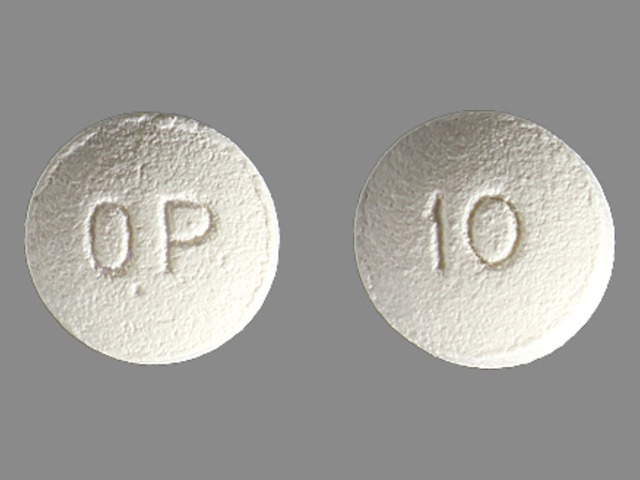
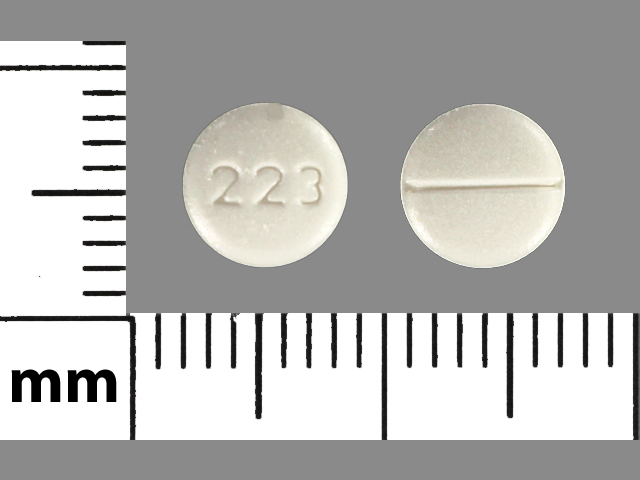
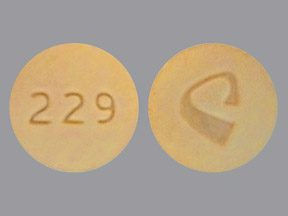
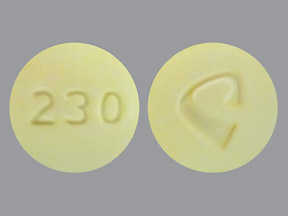
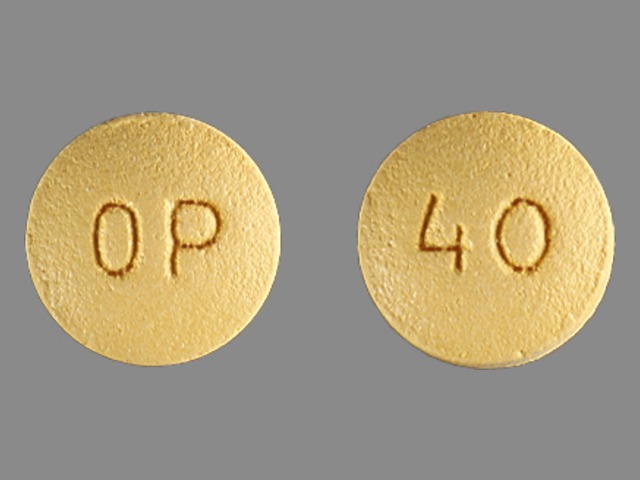
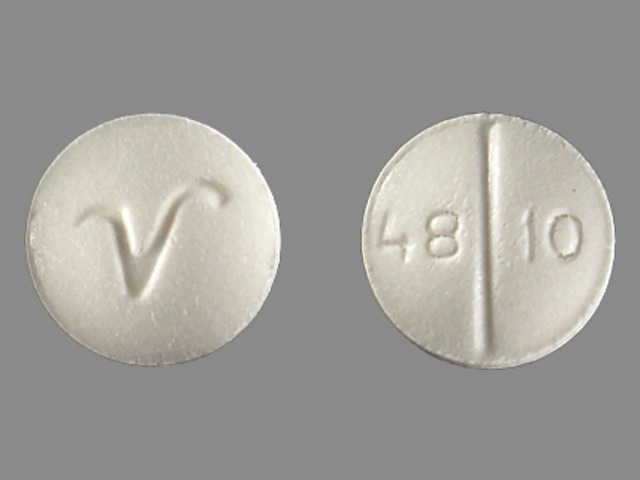
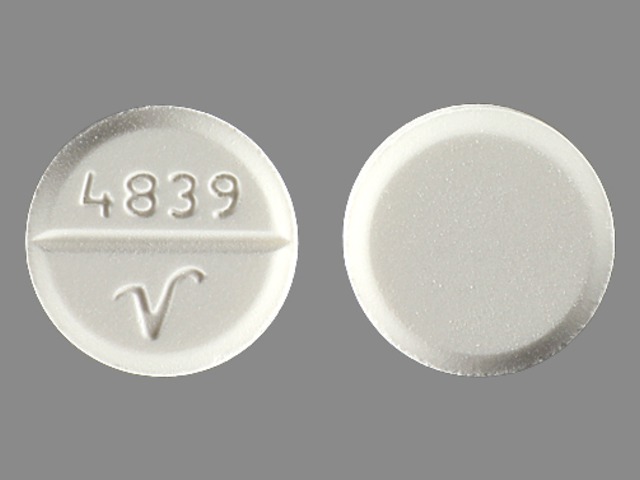
The brand names most people recognize are OxyContin, Roxicodone, Percocet, Endocet, and Xtampza ER. Many pharmacies dispense generic versions instead, labeled "oxycodone hydrochloride" or "oxycodone and acetaminophen." Generic and brand versions contain the same active ingredient but can look different, because each manufacturer chooses its own shape, color, and imprint.
Immediate-release oxycodone hydrochloride tablets are commonly round or oval and come in many colors, with one or more codes printed or embossed on the tablet. The color often differs by strength within the same brand. Extended-release tablets are typically film-coated and sometimes marked with the strength. Xtampza ER is a capsule. Oxycodone and acetaminophen tablets differ across manufacturers in color and markings, and the imprint typically points to both the opioid and acetaminophen amounts.
The imprint code, shape, color, and scoring together are what identify a pill. A pill identifier tool or a pharmacist can match a code to a specific product. Pills that do not come from a pharmacy deserve particular caution. Counterfeit tablets made to look like oxycodone have been found to contain fentanyl or other drugs, and these have caused overdose deaths. Pills obtained outside a pharmacy cannot be relied on to be what they appear to be. For general information from a government regulator, see the FDA.
Dosage & administration
Oxycodone is taken by mouth. It is available as a tablet, as a capsule, and in extended-release tablet and capsule forms. Immediate-release oxycodone hydrochloride tablets come in strengths of 5 mg, 10 mg, 15 mg, 20 mg, and 30 mg. Oxycodone and acetaminophen products pair oxycodone, in strengths such as 5 mg, 7.5 mg, or 10 mg, with acetaminophen at amounts like 325 mg, 500 mg, or 650 mg, depending on the product. Extended-release tablets and capsules are made in a wider range of strengths. These include 9 mg, 13.5 mg, 18 mg, 27 mg, and 36 mg in the capsule form, and 10 mg, 15 mg, 20 mg, 30 mg, 40 mg, 60 mg, and 80 mg in extended-release tablets. Not every strength is available in every product, and the higher extended-release strengths are intended only for people who are already tolerant to opioids.
Dosing is individualized, and the general principle in the labeling is to use the lowest effective dose for the shortest time that meets the person's treatment goals. For someone taking an opioid for the first time, prescribers generally begin with the lower end of the immediate-release range. They typically schedule doses every four to six hours as needed for pain, then adjust based on how well the pain is controlled and how well the medicine is tolerated. Someone moving from another opioid is usually started conservatively. Opioids vary in potency from person to person, and the label advises that it is safer to underestimate the starting dose than to overestimate it.
Extended-release forms follow a regular schedule rather than an as-needed one, usually every twelve hours. The tablets must be swallowed whole, one at a time, with enough water that they do not stick in the throat. Crushing, chewing, or dissolving an extended-release tablet can deliver a potentially fatal amount of the drug quickly. Xtampza ER capsules are designed differently from OxyContin tablets. Their labeling allows the capsule to be opened and the contents sprinkled on a small amount of soft food or given through a feeding tube, but the contents must not be crushed or chewed. Xtampza ER is also generally taken with food, consistently, as the label describes. Anyone who switches between products should have the prescriber or pharmacist explain the differences, as extended-release oxycodone products are not interchangeable milligram for milligram.
A person who has been taking immediate-release oxycodone may be switched to an extended-release product. The label notes that the relative bioavailability between the two is not precisely known. Because of that, the conversion carries a risk of excessive sedation and slowed breathing and calls for close observation. Likewise, when someone moves from a combination product such as oxycodone with acetaminophen to oxycodone alone, the prescriber decides whether the non-opioid pain reliever is still needed and adjusts the opioid accordingly.
The dose is reviewed regularly. If pain increases after a dose has been stabilized, prescribers are advised to look for the source of the new pain before simply increasing the dose. Occasionally a higher dose makes pain worse, a phenomenon called opioid-induced hyperalgesia. In that case reducing the dose may help.
Stopping oxycodone is treated as carefully as starting it. People who have taken it regularly for more than a short time can become physically dependent. Abrupt discontinuation has caused serious withdrawal symptoms, uncontrolled pain, and in some cases suicidal thoughts. When reduction is planned, prescribers generally lower the dose in small steps. They tailor the pace to the individual and may slow or pause it if withdrawal symptoms appear. A missed dose should be handled according to the pharmacist's or prescriber's directions for that product. Taking extra to catch up is not recommended in general because of the risk of overdose.
Oxycodone can be taken with or without food. Taking it with food or milk may lessen nausea. Alcohol should be avoided entirely. With extended-release products in particular, alcohol can cause the drug to be released faster than intended.
Warnings
Oxycodone carries several serious risks, and these are the reason for the extra safeguards around its prescribing.
Addiction, abuse, and misuse. Opioids can lead to opioid use disorder, even when taken as prescribed. The risk is higher in people with a personal or family history of substance use disorder or mental illness, but anyone can be affected. Misuse can lead to overdose and death. Prescribers are expected to assess each person's risk before prescribing and to reassess regularly. Physical dependence, where the body adapts and withdrawal occurs if the drug is stopped suddenly, is a separate expected effect and does not by itself mean addiction.
Slowed or stopped breathing. Respiratory depression is the most dangerous acute effect of oxycodone. It can occur at any time, but the risk is greatest when treatment begins or the dose goes up. For extended-release products, monitoring in the first day or two after starting or increasing the dose is emphasized. Older adults, debilitated people, and those with lung disease are at higher risk. Slowed breathing can progress to unconsciousness and death.
Accidental exposure. A single dose taken by a child who was not prescribed it can be fatal. Oxycodone should be stored securely, ideally locked, and out of the sight and reach of children and visitors. Many households with opioids are advised to also keep naloxone available. This is discussed further below.
Combining with other sedating substances. Taking oxycodone with benzodiazepines, alcohol, sleep medicines, or other central nervous system depressants can cause profound sedation, breathing problems, coma, and death. Prescribers reserve combined use for situations where other options are inadequate and typically use the lowest doses and shortest durations.
Interactions that change drug levels. Because oxycodone is processed by CYP3A4, drugs that block this enzyme can raise oxycodone levels and cause a potentially fatal overdose. Stopping a drug that induces CYP3A4 can have the same effect. See the Drug interactions section below.
Use in pregnancy. Extended opioid use during pregnancy can cause neonatal opioid withdrawal syndrome in the newborn. This is covered in the Pregnancy & breastfeeding section below.
Opioid Analgesic REMS. Oxycodone products fall under a federally required risk evaluation and mitigation strategy. Prescribers are strongly encouraged to complete education on safe opioid prescribing. Patients and caregivers are expected to receive counseling on safe use, storage, and disposal, and to read the Medication Guide each time a prescription is filled.
Other precautions. Oxycodone can cause low blood pressure and fainting, especially when standing up quickly. It can worsen head injury effects, because slowed breathing may raise pressure inside the skull and the sedation can mask neurological changes. Opioids can also provoke seizures in people with seizure disorders, cause spasm of the bile duct sphincter that worsens pancreatitis or biliary pain, and, with long-term use, cause adrenal insufficiency (symptoms include persistent nausea, weakness, dizziness, and low blood pressure) or reduced sex hormone levels. Serotonin syndrome is possible when oxycodone is combined with certain antidepressants or other serotonin-active drugs. Extended-release tablets that swell or harden can cause problems in people with narrowing of the digestive tract. Oxycodone can impair the ability to drive or operate machinery, particularly early in treatment or after any dose change.
Acetaminophen in combination products. Percocet, Endocet, and similar tablets contain acetaminophen, and too much acetaminophen can cause severe liver injury, including acute liver failure. Many over-the-counter cold, flu, and pain products also contain acetaminophen, so combined use can push total daily intake above recommended limits without the person realizing. Checking labels, or asking a pharmacist, is a basic safeguard. Rare but serious skin reactions and allergic reactions have also been reported with acetaminophen.
Contraindications
Oxycodone should not be used by people who have significant respiratory depression. It should also not be used in acute or severe bronchial asthma in an unmonitored setting or without resuscitative equipment, or when carbon dioxide levels in the blood are elevated. It should not be used where a gastrointestinal obstruction is known or suspected, including paralytic ileus, a condition in which the intestines stop moving normally. A known hypersensitivity to oxycodone, including a previous anaphylactic reaction, is another contraindication. For combination products, allergy to acetaminophen or serious liver disease is an additional concern.
Oxycodone is not generally recommended in people who are taking a monoamine oxidase inhibitor or who stopped one within the past 14 days. This combination can cause either serotonin syndrome or opioid toxicity. The decision about whether oxycodone is appropriate for someone with these or other conditions belongs to the prescriber, who can weigh the specifics.
Side effects
Most people who take oxycodone experience at least some side effects, particularly at first. In clinical studies of the extended-release product, the most commonly reported effects, those affecting more than about 5% of participants, were constipation, nausea, and sleepiness (each roughly one in four), followed by dizziness and itching (around one in eight), vomiting, headache, dry mouth, weakness, and sweating.
Constipation is the most persistent effect, because tolerance to it usually does not develop. Prescribers often recommend a stimulant laxative or a stool softener from the beginning of treatment, along with fluids and fiber. Some people need prescription medicines designed for opioid-induced constipation.
Nausea and vomiting are common early on and often ease within days as the body adjusts. Taking the dose with food can help, and anti-nausea medicine is sometimes used.
Drowsiness, dizziness, and lightheadedness are also most noticeable at the start or after a dose change. Caution with driving and with activities that require alertness is typical advice until the response is known.
Itching and flushing result partly from histamine release. They are generally not signs of true allergy, although a rash with swelling or breathing difficulty is a different matter and needs urgent attention.
Less common effects include a dry mouth, headache, sweating, mood changes, confusion, trouble urinating, muscle twitching, and abdominal discomfort. In children aged 11 to 16 in the extended-release studies, vomiting, nausea, headache, fever, and dizziness were the most frequent.
Effects that need prompt medical attention include slow or shallow breathing, extreme sleepiness or inability to wake, a bluish tint to the lips or skin, tiny pinpoint pupils with confusion, severe dizziness or fainting, a fast or irregular heartbeat, agitation with fever and muscle stiffness (possible serotonin syndrome), seizure, and signs of an allergic reaction such as facial swelling or wheezing. Persistent vomiting, severe weakness, and unusual fatigue can point to adrenal insufficiency. For acetaminophen-containing products, yellowing of the skin or eyes, dark urine, or pain in the upper right abdomen are warning signs of liver trouble.
Long-term use may bring tolerance, so the same dose provides less relief over time. Physical dependence can also develop, with withdrawal if the drug is reduced too quickly. Withdrawal symptoms include restlessness, watery eyes, runny nose, yawning, sweating, chills, muscle aches, dilated pupils, irritability, anxiety, abdominal cramps, nausea, vomiting, diarrhea, insomnia, and raised heart rate or blood pressure. Withdrawal is rarely life-threatening in adults, but it is very uncomfortable, which is why gradual tapering is preferred.
Drug interactions
Oxycodone interacts with several categories of medicine. A pharmacist can check a full medication list, including over-the-counter products, supplements, and herbal remedies.
CYP3A4 and CYP2D6 inhibitors. Drugs that block these enzymes can raise oxycodone concentrations and strengthen or prolong its effects, including dangerous breathing suppression. Examples include macrolide antibiotics such as erythromycin and clarithromycin, azole antifungals such as ketoconazole and itraconazole, and HIV protease inhibitors such as ritonavir. Grapefruit juice may have a similar effect. When an inhibitor is stopped, oxycodone levels fall, and effectiveness may decrease or withdrawal may appear. Prescribers may lower or raise the oxycodone dose around these changes.
CYP3A4 inducers. Rifampin, carbamazepine, phenytoin, and St. John's wort can lower oxycodone levels and reduce pain relief. Stopping such a drug has the opposite effect, raising oxycodone levels and increasing the risk of side effects.
Benzodiazepines and other central nervous system depressants. Combining oxycodone with alprazolam, diazepam, lorazepam, or similar drugs, or with sleep medicines, sedating antihistamines, muscle relaxants, gabapentin or pregabalin, antipsychotics, other opioids, or alcohol increases the risk of profound sedation, low blood pressure, slowed breathing, coma, and death. When combined use is judged necessary, prescribers use the lowest effective doses for the shortest time and often provide naloxone.
Serotonergic drugs. Antidepressants such as SSRIs, SNRIs, tricyclics, mirtazapine, and trazodone, migraine drugs of the triptan class, tramadol, certain muscle relaxants such as cyclobenzaprine, and linezolid can add to oxycodone's serotonin effects. Serotonin syndrome causes agitation, rapid heartbeat, sweating, tremor, muscle rigidity, and fever.
Monoamine oxidase inhibitors. Phenelzine, tranylcypromine, and related drugs, as well as linezolid and intravenous methylene blue, may cause serotonin syndrome or opioid toxicity. The labeling recommends avoiding oxycodone with MAOIs or within 14 days of stopping one.
Mixed agonist/antagonist and partial agonist opioids. Buprenorphine, butorphanol, nalbuphine, and pentazocine can reduce oxycodone's pain relief and may trigger withdrawal in someone dependent on it. Naltrexone, an opioid blocker, would likewise block the effects of oxycodone.
Muscle relaxants, diuretics, and anticholinergics. Oxycodone can enhance the effect of neuromuscular blocking agents. It can reduce the effectiveness of diuretics by prompting the release of antidiuretic hormone, and combined use with anticholinergic drugs, such as certain bladder medicines, can increase constipation and urinary retention.
Acetaminophen-containing products. Anyone taking oxycodone with acetaminophen should be aware of other acetaminophen sources. Heavy alcohol use also raises the risk of acetaminophen liver damage.
This list is not exhaustive. Patients can read more general consumer information at MedlinePlus Drug Information and should always report all medicines and supplements to their prescriber and pharmacist.
Naloxone and overdose
An oxycodone overdose typically involves very slow or absent breathing, extreme drowsiness progressing to unresponsiveness, limp muscles, cold and clammy skin, bluish lips or fingernails, and pinpoint pupils. In some cases, particularly after oxygen deprivation, the pupils may be widely dilated instead. Snoring or gurgling sounds can indicate a partly blocked airway. Fluid in the lungs, a slowed heart rate, and low blood pressure may also occur.
An overdose is a medical emergency. The immediate priorities are calling emergency services and restoring breathing. Naloxone is a medication that reverses opioid effects and is available as a nasal spray or an injection. Many states allow it to be obtained without an individual prescription, and prescribers are encouraged to discuss naloxone access with every person taking an opioid and with those who live with them. This is particularly relevant for those who take higher doses, use other sedating drugs, have a history of opioid use disorder or prior overdose, or share a home with children.
Naloxone can wear off sooner than oxycodone does, especially extended-release oxycodone, so breathing can slow again after an initial recovery. For this reason, emergency care is needed even if the person seems to wake up. In a person who is physically dependent on opioids, naloxone can trigger abrupt withdrawal. Medical teams may give it in smaller, carefully titrated amounts, but in a life-threatening situation the priority is restoring breathing.
Pregnancy & breastfeeding
Oxycodone crosses the placenta. Using opioids for an extended period during pregnancy can lead to neonatal opioid withdrawal syndrome, in which the newborn experiences irritability, tremors, feeding difficulty, high-pitched crying, diarrhea, and sometimes seizures. It can be life-threatening if not recognized and treated, which is why the labeling calls for neonatal specialists to be available at delivery when a pregnant woman has used opioids for a prolonged period. Opioids taken during labor can also cause breathing depression in the newborn, so oxycodone is generally not used in that setting without medical supervision.
Opioid use in pregnancy involves balancing risks. Untreated severe pain can affect health, and stopping opioids abruptly in a person who is dependent can cause withdrawal that is harmful to both mother and fetus. For these reasons, decisions are made individually between a woman and her health care professional. Anyone who is pregnant, planning pregnancy, or who becomes pregnant while taking oxycodone should speak with their prescriber rather than changing anything on their own.
Oxycodone passes into breast milk. Infants of mothers taking it can become unusually sleepy, feed poorly, or have slowed breathing, and breastfeeding infants can also experience withdrawal if the mother stops suddenly or weans. Many prescribers advise using the lowest dose for the shortest time while nursing and watching the baby closely for sedation, limpness, and trouble with breathing or feeding. Newborns and premature babies are especially sensitive. Some mothers are advised to avoid it altogether, depending on the circumstances, and a clinician can help weigh this.
Pediatric use
The use of oxycodone in children is more restricted than in adults. Extended-release oxycodone (OxyContin) is approved for opioid-tolerant pediatric patients aged 11 and older who are already taking a minimum daily amount of oxycodone or an equivalent opioid. Safety and effectiveness have not been established in younger children for that product. Immediate-release forms have more limited pediatric labeling, and in some cases children are given oxycodone off-label under specialist guidance, with doses calculated by weight.
Children and adolescents face particular risks. Accidental ingestion by toddlers and young children can be fatal even from a single tablet, and extended-release products contain large amounts of drug. Adolescents are a group in which prescription opioid misuse is a concern, so safe storage and disposal are especially important in households with teenagers. In the extended-release pediatric studies, vomiting, nausea, headache, fever, and dizziness were the most commonly reported side effects. Because there are safer and often equally effective options for most childhood pain, oxycodone is generally reserved for severe pain, in a clinical setting, with close supervision.
Older-adult use
Older adults are more sensitive to opioids and tend to clear them more slowly, so they usually start at the low end of the dosing range and have doses adjusted gradually. They are more likely to experience sedation, confusion, dizziness, and unsteadiness, and therefore falls and fractures. Slowed breathing is a greater concern, especially when other sedating drugs are in the mix, which is common in older people who take several medicines. Constipation is also more troublesome, and the urinary retention caused by opioids can be a particular problem for men with prostate enlargement.
Frail, undernourished, or debilitated people, and those with lung disease, need especially careful monitoring, particularly during the first days of treatment and after any increase in dose. Opioids are on lists of medicines to use cautiously in older adults, and any combined acetaminophen should be tracked carefully to avoid exceeding daily limits. Doctors and pharmacists often review the entire medicine list in older adults when oxycodone is started.
Kidney & liver impairment
Because the liver metabolizes oxycodone and the kidneys remove it, impairment of either organ can raise drug levels and prolong effects. In people with liver impairment, oxycodone and its active metabolite can accumulate. Labeling for extended-release products generally advises starting at a reduced fraction of the usual dose and monitoring closely for sedation and slowed breathing. With oxycodone and acetaminophen products, existing liver disease is also a concern because of the acetaminophen component, and some people with significant liver disease are given oxycodone without acetaminophen.
In kidney impairment, oxycodone and its metabolites can build up, and the concentrations in the blood are higher than in people with normal kidney function. Prescribers usually begin with a conservative dose and adjust slowly. Hemodialysis does not remove oxycodone efficiently. People with kidney or liver disease should always make sure the prescriber and pharmacist know about it.
Storage and disposal
Oxycodone should be stored at room temperature, in the original container, away from moisture, heat, and direct light. It should be kept in a locked cabinet or lockbox rather than in a medicine cabinet where children, guests, or others might find it. Sharing oxycodone with another person is illegal and dangerous, as a dose that is appropriate for one person can be fatal for another.
Leftover tablets should be disposed of promptly once they are no longer needed. The preferred option is a drug take-back program, such as those at many pharmacies and police stations, or a DEA-authorized collection site. Some oxycodone products appear on a short list of medicines that the FDA says may be flushed when no take-back option is readily available, because of the danger posed by accidental ingestion. The Medication Guide or pharmacist can say whether a specific product is on that list. Otherwise, household trash disposal instructions from the FDA involve mixing the medicine with an unappealing substance such as used coffee grounds, sealing it in a bag, and discarding it.